Software is Going DIY
- #artificial-intelligence
- ·#software
TL;DR
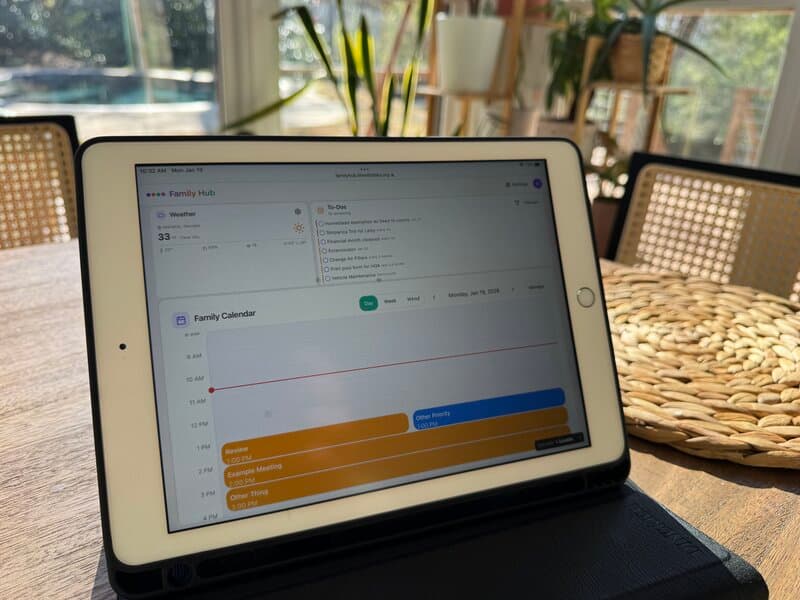
Building simple software applications with AI has become so easy that $20/month vibe coding subscriptions are all you need for many personal use cases. I tried a few different vibe coding services to build a connected family dashboard and quickly got a working MVP with Lovable. The Family Hub app now sits on a tablet in our kitchen and is used daily.
Intro
Over the holiday break, my wife shared a cool third-party app with me from an ad that had gotten served to her on social media. The app allowed you to connect the calendars of your family members and displayed a cohesive, shared view of the family's schedule. We both loved the idea and saw the value of using it as an at-a-glance way to stay on top of schedules while hanging out in shared areas like the kitchen or living room.
Looking deeper into the details of the offering, there was both an initial hardware purchase and then a monthly subscription to keep using it. Naturally, my nerd brain started breaking down the components of what it took to make this app work and how I could do it instead. I instinctively do this with many things, even if I don't actually take on the project. For example, I got a Dakboard years back that I quickly clocked as a Raspberry Pi with the software to run the service on it. Even though I have 5-10 Raspberry Pis around the house doing various things, I still use Dakboard to show photos and weather. Nowadays, that decision framework is much different. But first, let's align on the build vs buy debate.
Build vs Buy
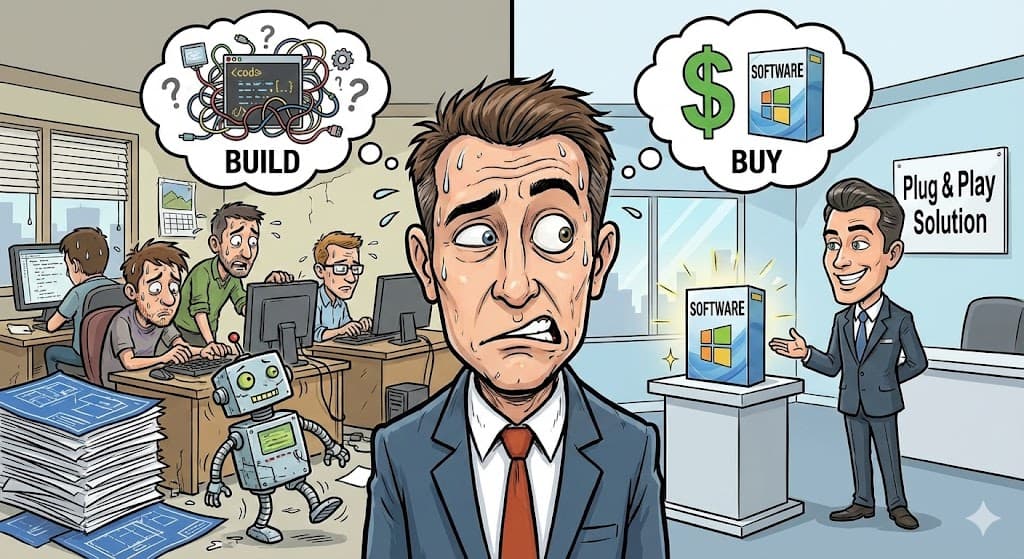
We all know the age-old debate of build vs buy. Businesses love to buy off-the-shelf solutions to problems that fit certain traits:
- Not related to the core business
- Commoditized
- Standardized
Examples include payroll, HR, ERP, CRM, etc.
On the flip side, you'll also build plenty of software internally that fits other traits:
- Related to the core business
- Unique
- Customized
- Lack of effective third-party solution
- Lack of reasonably priced third-party solution
Examples include the literal product a company sells (i.e. Workday building their payroll product), internal web portals for how a company uniquely operates (i.e. an internal approval system for purchasing home office equipment), etc.
Historically, even if a company decided that it would like to build something instead of buy it, they still needed to grapple with the economics related to how long it would take and how it would pay off in the long run. Many factors influence this decision, such as the internal talent pool, existing consultant relationships, available budget, etc. Because of this, the economics of building vs buying have been heavily weighted towards buying on average. Enterprise and B2B software sales playbooks are chock full of targeting DIY solutions as sales opportunities.
Oh, so you manage your approval process internally? Tell me more about that system and the pain points you've experienced with it.
Then the sales rep smiles internally and listens to ammunition to use to help them close the deal 😈.
How Vibe Coding Changes the Build vs Buy Equation
Unless you live under a rock, you've heard about the impact of AI and how it's poised to transform many white collar industries, and quickly. Among them, software development is high on that list. I strongly disagree with the premise that AI will replace software developers, but it will drastically change how it is done, the skill sets required, and the overall economics of software development.
Effectively developing and managing software will continue to require thinking critically and in a systems-level way. Many folks do not have a strong grasp on that and AI will not turn them into world-class developers overnight. However, anyone with this mindset and the ability to describe what they want from an application with clarity can now build MVPs of applications, thanks to "vibe coding" platforms. Product managers and executives across the board should salivate at the thought of this, since much of their job is already spent in this headspace.[1]Hot take: the roles of technical product manager and software developer will combine into one role over time.
I have always loved writing code; it lets you combine creativity with logic to build something that does whatever you want it to. It could be a game, a blog, a helpful tool, or an entire business. At the same time, adding AI to the mix means I can create 5-10x more if I stay at a slightly higher level than writing the code itself. Honestly, I thought I would miss it more, but so far I don't. I still review the code and think about every component of the system. I design how I want the experiences to flow and how the data model should be structured. The more you think about it, the more you realize that literally writing the code is a small part of the overall process (that takes up meaningful time!). With AI and vibe coding, I get to hand off that part of the process with the right oversight and quality control structure in place.
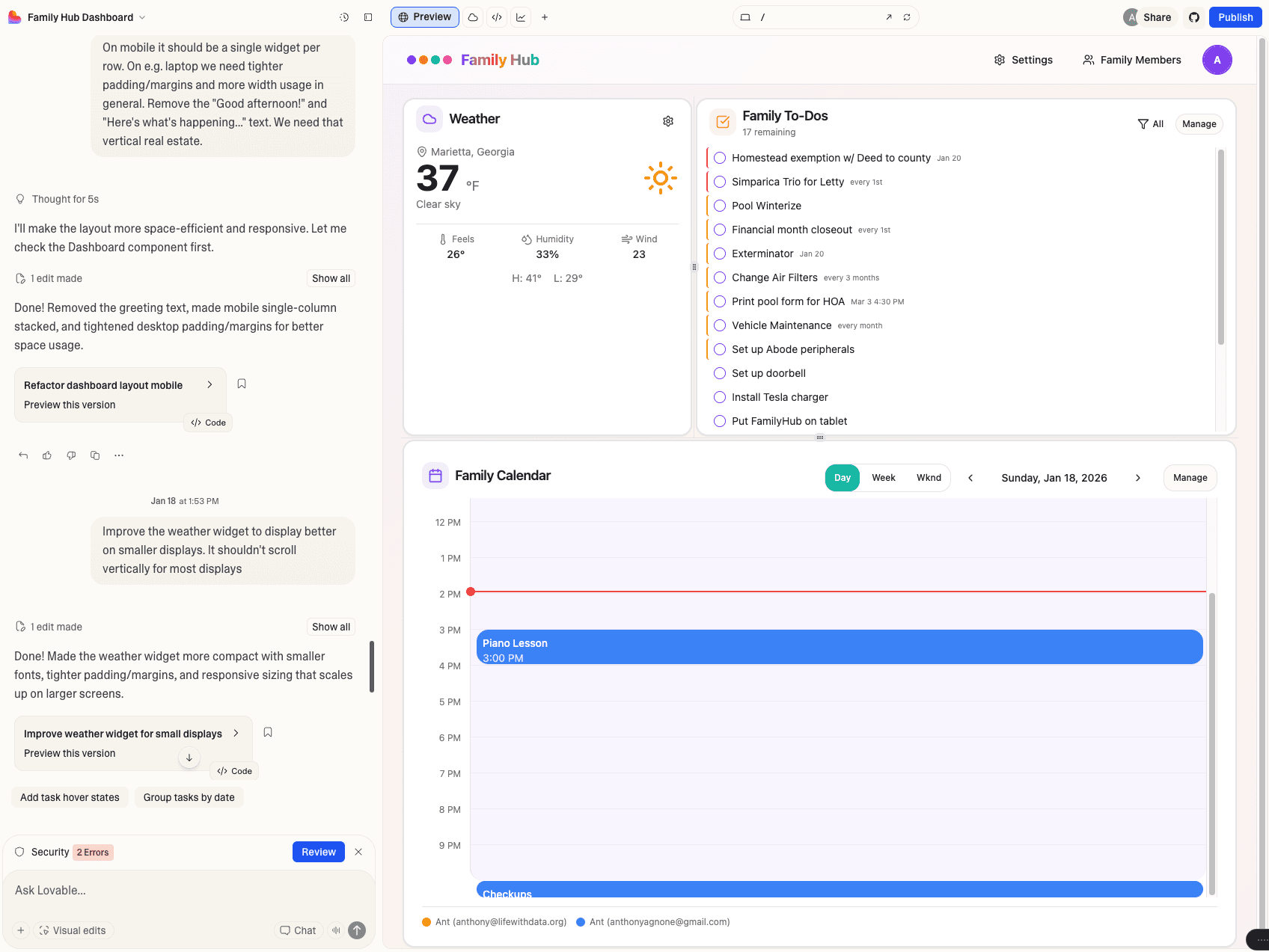
In this case, I tried a few different vibe coding solutions to quickly create a connected family dashboard. I've been knee-deep in Cursor and Claude Code since they first released, but I wanted to try a less technical platform that my wife could also use. This isn't a sponsored post or an attempt to do a product review, so I'll just summarize my experience in these bullet points:
- Started with Google's AI Studio. Quickly got a UI prototype. Asked for a Next.js structure with a back end. It blew up (SPA only). Google has other AI-based app builders, but way too many. Pass.
- Restarted with Lovable. Much better results, including Next.js + Supabase. Winner 🏆.
So with this new wave of how to build software, what does that mean for the build vs buy equation? Before I pontificate, I'll just say that it's all still very much in flux. In general though, the high-level obvious effect is it will be easier to build, which buyers and sellers alike will react to. Sellers of software must adapt to this new reality, or they will be left behind by competition and customer DIY. Buyers of software similarly should understand this shift, for two reasons:
- They can now build much more of their simple use cases, which will net them significant ROI.
- They can re-evaluate the ROI of their existing software vendors, which may not be as effective as they once were.
Let's dig a little deeper for a second into just how meaningful the build-not-buy path is for the bottom line of buyers. Previously, if a company wanted to build something in-house, they would need to use budget to either prioritize their internal development resources of hire an external consultant to build and/or maintain the resulting software. This was a tough decision across several fronts. Whether it's time, money, or both, you were taking resources away from the core business to make a tangential improvement that you hoped will benefit the bottom line. When using external consultants, you necessarily paid a premium for the expertise and time of the consultant, which was often a significant chunk of the budget. When using internal resources, you by definition were using zero-sum resources that could be better spent on other things.
Since AI and vibe coding have made conversational clarity and systems-oriented thinking the main pillars to build simple software, you now have a much larger talent pool to pull from! Now, the target user of your internal software can also play a large part in the build process.
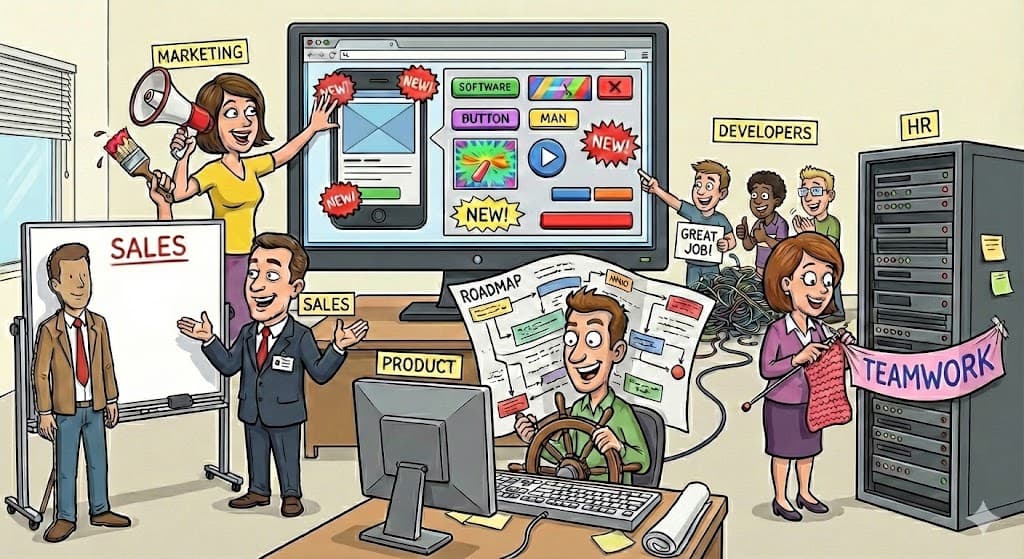
For example, say a marketing team wants to streamline how they launch new landing pages for different products or campaigns. There's several choices of third-party vendor solutions for this, but none make sense for the ROI. Now, instead of stopping at Figma designs and waiting for a developer to build the prototype, the marketing team can build the prototype and iterate on it several times over. In the ideal case, a top-tier vibe coding platform will enable the marketing team to own that software tool over time. Even in the more typical case of a development team taking over to polish and iterate on the tool, the marketing team has already gone through several feedback loops to answer questions for themselves. That's major time savings.
The Power of Building Your Own
One of the most powerful aspects of building your own software is the ability to extend it to your own unique needs. Sure, it feels good to save a few bucks rebuilding something we would have otherwise spend money on. What really makes me happy is the fact that with a few more messages back and forth with AI, we added a weather widget. With a few more then, we connected it to our shared Todoist task manager. Now, we've gone past the initial build vs buy decision and into the realm of fast and bespoke creation. Whenever we want to add a new capability or tweak a very specific detail about the application, we just need to articulate that in a conversational interface.
We wanted to choose a different color for each calendar.
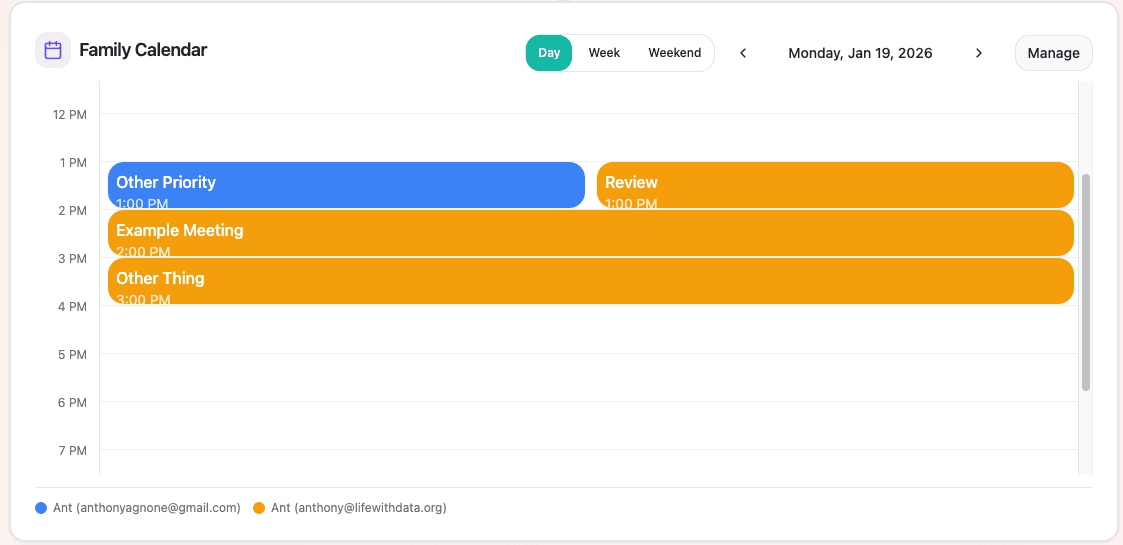
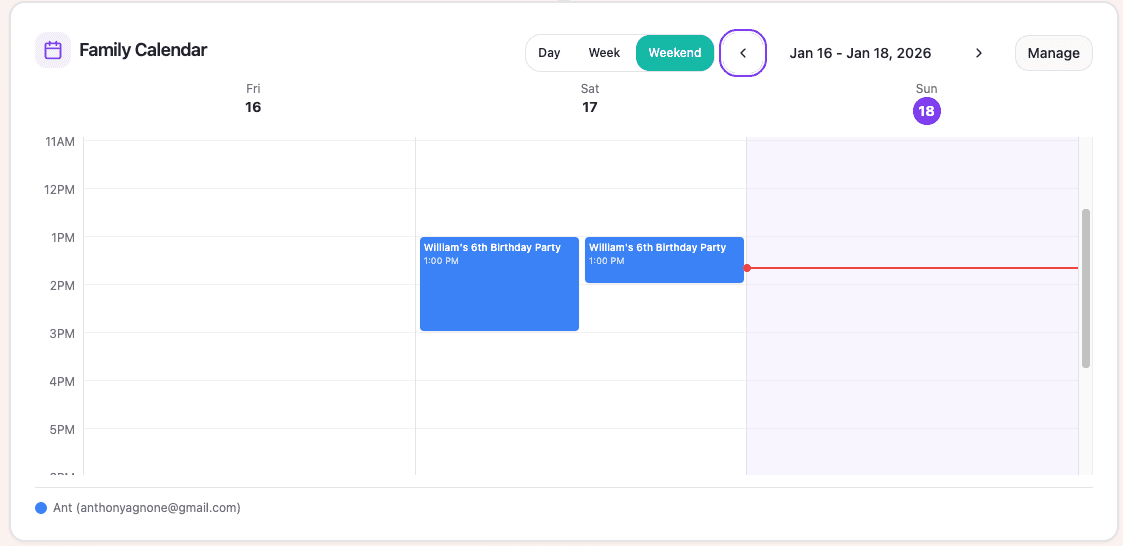
We wanted to change whether the calendar display showed the current day, week, or weekend.
We wanted to have our to-do labels from Todoist show through in the display.
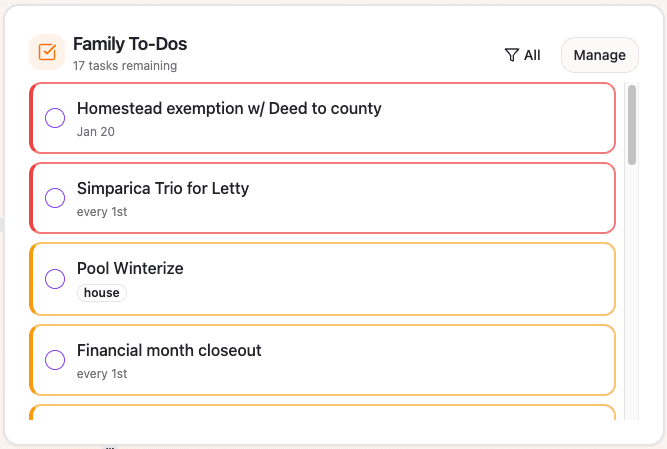
Simple features, for sure. But, super powerful when you think about how these changes came from simply asking for them. To prototype a change, you don't need to understand UI design, CSS styling, or what web framework is currently being used. Just guide the app's evolution through conversation (and consider tapping a technical person every once in a while to peek under the hood 😉).
Brave New World
It's worth noting just how quickly this landscape is changing. A few years ago, each year might bring a few notable changes in the software industry. Every few years would bring a dramatic shift. Now it's literally every few weeks. Everyone should take the time to kick the tires and see what is now possible, period.
Keep in mind that there's still a massive long tail in how effective someone can be in guiding AI to build software solutions. By definition, someone with years of experience developing software will be much more effective at coaxing it then an accountant who has never written a line of code. This means that there is still tremendous value on technical talent, and that will not change. That being said, I'm still super bullish on how much the bar has been lowered for building software. It's much more democratized and accessible than ever before, which only means good things for everyone.
Conclusion
I'm not saying that you should all run out and build your own software. But you should at least understand the shift that is happening and how it will impact you and your business. The more you can build in-house, the more you can control the experience and the more you can save on costs. In this small household example, we saved an upfront $100 and ongoing $20/month by using a $20/month vibe coding subscription. That single subscription will also be used for the second...third...etc applications we build moving forward.
Oh, and you can use the Family Hub app yourself if you want. Let me know what other connections you'd like to see and I'll throw them in there.
Footnotes
- Hot take: the roles of technical product manager and software developer will combine into one role over time. ↩
👋 Good read?
Subscribe for more insights on AI, data, and software.